The third variable that I would consider is what I call “The Unit Jumper.” There are a number of factors that contribute to the unit jumping phenomenon…
I read of considerable frustration as I visit various western hunting forums with the western point systems and I read of a growing number of hunters who are looking to burn their points sooner for lower tier tags rather than continue to build points and hold out for an upper echelon tag. As these applicants shift their focus from top tier to lower tier units they contribute to point creep.
For example, let’s say that I’ve been applying for the Beaver, West early any weapon hunt unsuccessfully for many years and in 2018 I’ll be entering the drawing with 18 points. Looking at my spreadsheet, based on the 2017 applicant pool with 18 points I would to need to apply for 25 to 30 more years before I know I’d be guaranteed a tag!!! (Unless of course I’m one of the lucky guys that draws a random tag.) I come to the realization that I’d rather burn my 18 points now, hunt sooner rather than later… I’m not getting any younger, my family situation is good this year, I will have sufficient vacation or leave time from work this year… I want to draw THIS YEAR. Turning back to my spreadsheet I see a unit that I’m very familiar with because I enjoy spending time there doing other outdoor activities outside of hunting season like hiking and fishing. I also see that it only took 15 points to draw a bonus tag there in 2018, my 18 points would definitely put me at the top of the heap. So in 2018 I decide instead to apply for the Plateau, Fishlake/Thousand Lake early any weapon tag. Bringing my 18 points over to the Fishlake unit from the Beaver unit does have on impact on the Fishlake applicants with fewer than 18 points.
Applicants can also “jump” units and have a similar effect on point creep by applying for the same unit but by selecting a different weapon type. Let’s assume that I’ve been applying for the Wasatch Mountains early any weapon hunt and I’ll enter the 2018 application with 11 points. From my spreadsheet, I would estimate that it would take 4 to 6 years for me to draw one of the guaranteed bonus tags… and like in the above example I’m done waiting. I really like the Wasatch unit though, I know the area well, I know I could scout it often due to its proximity to my home, and I’ve helped other guys with hunts there in the past so I’d like to still hunt the Wasatch unit. From my spreadsheet I see that with 11 points I should draw the 2018 muzzleloader tag… I’ve got a muzzleloader, I haven’t shot it in a while and it’d be fun to dig it out of the back of the safe, wipe the dust off, and put a new scope on it (since powered scopes are now legal). So I decide to switch from any weapon to muzzleloader with my application for 2018. Bringing my 11 points over from the early any weapon to the muzzleloader also has an impact on the muzzleloader applicants with fewer than 11 points.
Another reason guys unit jump is commonly referred to as “hot spotting.” Every year different magazines and publications put out lists of the top units across the west. As applicants read these publications they decide to jump from unit to unit based upon these recommendations. Application services like Cabela’s TAGS also contributes to this as they bombard specific units with applications on a yearly basis.
(All the examples I’ve listed here are purely hypothetical scenarios to demonstrate the point.)
It is a good thing though that we have the freedom and ability to change our selections on a year to year basis. Our priorities change, our situations change, and our expectations change and we have the opportunity to modify our selections on an annual basis.
PREVIOUS: Point Creep Variable #2 - "The Point Buyer"
NEXT: Point Creep Variable #4 - "The Absent Applicant"

Jan 6, 2018
Jan 5, 2018
Point Creep Variable #2 - "The Point Buyer"
NOTE: All the data presented below is for Utah resident limited entry bull elk applicants. The individual limited entry and once-in-a-lifetime species analysis pages will be updated to include all the resident and non-resident data prior to the Utah application period opening on January 25, 2018.
The second variable of point creep is who I call “The Point Buyer”… the applicant who instead of applying for a tag in a specific unit purchases a bonus point for the year. There are a number of reasons why an applicant may choose for a single year, or even multiple years, to simply purchase the bonus point rather then apply for a tag. I have done this before myself due to a known family commitment during the time of my desired hunt. I chose to purchase the point instead of risking the chance of actually drawing the tag and suffering the consequences (I am still convinced that had I actually applied that year I would have been blessed/cursed with the SUCCESSFUL email). I also do this on an annual basis with LE buck deer points for my father, we are hoping that in the not far off future to have a special deer hunt for him before he gets too old and due to work, church, and other responsibilities such a hunting trip is not currently practical. The reasons are numerous and often personal in relation to health, church, work, and/or family.
But these individuals are often overlooked in the overall scope of our research and preparation. In an honest moment… for many years my research leading up to the application period entailed only looking at the drawing results for the unit I was going to apply for from the previous year. Not once did I ever consider this group of individuals and the impact that they could have on my immediate success in drawing a tag.
The catalyst for this entire series was a podcast by a hunting “celebrity” who stated that he had the most bonus points for a specific LE species here in Utah. I was excited to hear his confidence looking towards the 2018 application, I do enjoy seeing my home state of Utah on his shows because I think he produces a quality on screen product. But then I decided to cross-reference the drawing results report with the bonus point purchase summary. I discovered that since he was unsuccessful in 2017 that he would appear to be the highest point holder going into the 2018 application cycle… but there were 6 individuals with the same number of bonus points who purchased their bonus point in 2017. That right there is a game changer!!! I hope that he’s smart enough to include the Bonus Point Purchase Summary in his research and realize that if any of those other 6 guys decides to apply this year for the same unit he does that his sure thing is no longer a sure thing! The inability to incorporate "The Point Buyer" into odds calculations is the great flaw in many of the odds calculators (including my own spreadsheets).
This table outlines the number of Utah resident Bonus Point Buyers, Actual Applicants, Total Active Applicants, and respective percentages of Bonus Point Buyers and Actual Applicants for the 2017 limited entry elk drawing. I realize that this is a lot of data and appears overwhelming, but take just a second to look over it carefully and digest it for just a few minutes.
If you only look at the drawing results report you are neglecting 1/5th (21%) of the total picture and the amount of the picture you are neglecting gets bigger and bigger the more points you have. Let's assume that I was one of the individuals who entered the 2017 application with 23 points but was unsuccessful and will be entering the 2018 application with 24 points. With just a quick glance of the drawing results report I can see that the one Actual Applicant with 24 points in 2017 was successful in drawing a tag. So logically it would make sense to think that all the bonus point holders ahead of me are gone and my 24 points in the 2018 drawing would place me at the very top of the drawing. Turning to the bonus point purchase summary I would see that there were 6 individuals who purchased their 25th bonus point in 2017. These 6 individuals can't be expected to purchase points forever and they will eventually apply for and draw a tag.
The most interesting part of this table is that the percentage of Point Buyers increases as your point accumulation increases… at the max point total there were 6 Point Buyers compared to only 1 Actual Applicant.
So how does this contribute to point creep? Any one of these Point Buyers can jump back in the Actual Applicant pool. If I’m applying for a high demand unit that offers just a few tags, even one of these Point Buyers deciding to become an Actual Applicant can have a dramatic impact if he/she had enough points to jump in and be right at the top for the unit we’re applying for.
PREVIOUS: Point Creep Variable #1 - Tag Allocation
NEXT: Point Creep Variable #3 - "The Unit Jumper"
The second variable of point creep is who I call “The Point Buyer”… the applicant who instead of applying for a tag in a specific unit purchases a bonus point for the year. There are a number of reasons why an applicant may choose for a single year, or even multiple years, to simply purchase the bonus point rather then apply for a tag. I have done this before myself due to a known family commitment during the time of my desired hunt. I chose to purchase the point instead of risking the chance of actually drawing the tag and suffering the consequences (I am still convinced that had I actually applied that year I would have been blessed/cursed with the SUCCESSFUL email). I also do this on an annual basis with LE buck deer points for my father, we are hoping that in the not far off future to have a special deer hunt for him before he gets too old and due to work, church, and other responsibilities such a hunting trip is not currently practical. The reasons are numerous and often personal in relation to health, church, work, and/or family.
But these individuals are often overlooked in the overall scope of our research and preparation. In an honest moment… for many years my research leading up to the application period entailed only looking at the drawing results for the unit I was going to apply for from the previous year. Not once did I ever consider this group of individuals and the impact that they could have on my immediate success in drawing a tag.
The catalyst for this entire series was a podcast by a hunting “celebrity” who stated that he had the most bonus points for a specific LE species here in Utah. I was excited to hear his confidence looking towards the 2018 application, I do enjoy seeing my home state of Utah on his shows because I think he produces a quality on screen product. But then I decided to cross-reference the drawing results report with the bonus point purchase summary. I discovered that since he was unsuccessful in 2017 that he would appear to be the highest point holder going into the 2018 application cycle… but there were 6 individuals with the same number of bonus points who purchased their bonus point in 2017. That right there is a game changer!!! I hope that he’s smart enough to include the Bonus Point Purchase Summary in his research and realize that if any of those other 6 guys decides to apply this year for the same unit he does that his sure thing is no longer a sure thing! The inability to incorporate "The Point Buyer" into odds calculations is the great flaw in many of the odds calculators (including my own spreadsheets).
This table outlines the number of Utah resident Bonus Point Buyers, Actual Applicants, Total Active Applicants, and respective percentages of Bonus Point Buyers and Actual Applicants for the 2017 limited entry elk drawing. I realize that this is a lot of data and appears overwhelming, but take just a second to look over it carefully and digest it for just a few minutes.
| Bonus Point Group | Point Buyer | Actual Applicant | Total Active Applicant Pool | % Point Buyer | % Actual Applicant |
|---|---|---|---|---|---|
| 0 | 1916 | 9067 | 10983 | 17% | 83% |
| 1 | 1378 | 6257 | 7635 | 18% | 82% |
| 2 | 1172 | 5253 | 6425 | 18% | 82% |
| 3 | 1037 | 4384 | 5421 | 19% | 81% |
| 4 | 989 | 3432 | 4421 | 22% | 78% |
| 5 | 809 | 2912 | 3721 | 22% | 78% |
| 6 | 680 | 2477 | 3157 | 22% | 78% |
| 7 | 619 | 2212 | 2831 | 22% | 78% |
| 8 | 555 | 1844 | 2399 | 23% | 77% |
| 9 | 497 | 1728 | 2225 | 22% | 78% |
| 10 | 483 | 1663 | 2146 | 23% | 77% |
| 11 | 410 | 1414 | 1824 | 22% | 78% |
| 12 | 453 | 1267 | 1719 | 26% | 74% |
| 13 | 396 | 1166 | 1562 | 25% | 75% |
| 14 | 325 | 1037 | 1362 | 24% | 76% |
| 15 | 302 | 894 | 1196 | 25% | 75% |
| 16 | 245 | 676 | 921 | 27% | 73% |
| 17 | 210 | 603 | 813 | 26% | 74% |
| 18 | 158 | 469 | 627 | 25% | 75% |
| 19 | 140 | 390 | 530 | 26% | 74% |
| 20 | 114 | 292 | 406 | 28% | 72% |
| 21 | 62 | 181 | 243 | 26% | 74% |
| 22 | 53 | 119 | 172 | 31% | 69% |
| 23 | 19 | 24 | 43 | 44% | 66% |
| 24 | 6 | 1 | 7 | 88% | 22% |
| TOTAL | 13027 | 49762 | 62789 | 21% | 79% |
If you only look at the drawing results report you are neglecting 1/5th (21%) of the total picture and the amount of the picture you are neglecting gets bigger and bigger the more points you have. Let's assume that I was one of the individuals who entered the 2017 application with 23 points but was unsuccessful and will be entering the 2018 application with 24 points. With just a quick glance of the drawing results report I can see that the one Actual Applicant with 24 points in 2017 was successful in drawing a tag. So logically it would make sense to think that all the bonus point holders ahead of me are gone and my 24 points in the 2018 drawing would place me at the very top of the drawing. Turning to the bonus point purchase summary I would see that there were 6 individuals who purchased their 25th bonus point in 2017. These 6 individuals can't be expected to purchase points forever and they will eventually apply for and draw a tag.
The most interesting part of this table is that the percentage of Point Buyers increases as your point accumulation increases… at the max point total there were 6 Point Buyers compared to only 1 Actual Applicant.
So how does this contribute to point creep? Any one of these Point Buyers can jump back in the Actual Applicant pool. If I’m applying for a high demand unit that offers just a few tags, even one of these Point Buyers deciding to become an Actual Applicant can have a dramatic impact if he/she had enough points to jump in and be right at the top for the unit we’re applying for.
PREVIOUS: Point Creep Variable #1 - Tag Allocation
NEXT: Point Creep Variable #3 - "The Unit Jumper"
Jan 4, 2018
Point Creep Variable #1... Tag Allocation
The first variable to point creep to discuss is the allocation of tags based upon the management plan and the objectives assigned to each unit. Examples of objectives outlined in the management plan are age trends of harvested animals, buck to doe ratios, numbers of mature bucks/bulls per 100 cows/does, and/or overall herd estimates. Most of the counts that are obtained by DWR personnel are performed post-hunt while game animals are concentrated on winter range and are more easily observed and counted.
The DWR is bound by the management plan to propose tag numbers based upon the objectives outlined in the plan. If a unit has a herd that exceeds the prescribed herd objective then more tags must be proposed. If a buck to doe ratio exceeds what is outlined in the plan then the DWR is bound by the plan to propose more tags. The flipside is also required. If herd estimates are below the objective herd estimate then the DWR proposes fewer tags for the unit. Here is a recent example… the Cache, South unit age objective for harvested bull elk was recently increased from 4.75 to 6.75 years. The last harvest data that I have was several years old (from the 2015 Annual Big Game Report) lists the average age of harvested bull elk at 5.7 years old. Based upon this change in age objective we expected the number of tags to be cut. In 2015 and 2016 there were 140 and 156 bull elk tags, respectively, offered in the drawing under the 4.75 year age objective then in 2017, following the increase in age objective the number of tags issued for the Cache, South unit was reduced to 75… exactly what was expected to happen based upon the management plan.
There is an ebb and flow each year as the annual winter count data is gathered, analyzed, and reported. Based upon this report, the DWR makes a formal proposal for tag numbers for every species and every unit. This occurs in late March or early April in time for the April/May public process sessions of Regional Advisory Committee (RAC) and Wildlife Board (WB) Meeting.
Now here is where it gets interesting. The DWR is bound by the management plans and makes their proposal accordingly but during the RAC and WB meetings the public is allowed to provide input and Conservation Organizations and other Special Interest groups often make recommendations that deviate from the management plan. I have observed a number of RAC and WB meetings and I have found that these recommendations made largely cut tags from the DWR proposal for a number of reasons. Most often the Conservation Organization or Special Interest group couches their recommendation to cut tags from the DWR proposal as “preserving trophy quality” or something of that nature. There always seems to be a representative of the Cattlemen’s Association that recommends additional tag increases to reduce competition from big game with their cattle… but largely recommendations from the public seem to be skewed to one side requesting tags be cut from the proposal for one reason or another.
The WB considers the DWR proposal in combination with the public input and finalizes the tag numbers at the May Wildlife Board Meeting. This particular meeting is often the highest attended of the year and I have seen exchanges become rather heated during discussion periods. In general though, the WB has done a reasonable job of finding middle ground between the DWR proposal and public wants.
Tag cuts contribute to or exacerbate point creep for a unit, especially in units where there are already few tags offered to begin with.
Links to the individual management plans for each species can be found on the Utah DWR website (LINK HERE) about 2/3 of the way down the page.
PREVIOUS: Point Creep?
NEXT: Point Creep Variable #2 - "The Point Buyer"
The DWR is bound by the management plan to propose tag numbers based upon the objectives outlined in the plan. If a unit has a herd that exceeds the prescribed herd objective then more tags must be proposed. If a buck to doe ratio exceeds what is outlined in the plan then the DWR is bound by the plan to propose more tags. The flipside is also required. If herd estimates are below the objective herd estimate then the DWR proposes fewer tags for the unit. Here is a recent example… the Cache, South unit age objective for harvested bull elk was recently increased from 4.75 to 6.75 years. The last harvest data that I have was several years old (from the 2015 Annual Big Game Report) lists the average age of harvested bull elk at 5.7 years old. Based upon this change in age objective we expected the number of tags to be cut. In 2015 and 2016 there were 140 and 156 bull elk tags, respectively, offered in the drawing under the 4.75 year age objective then in 2017, following the increase in age objective the number of tags issued for the Cache, South unit was reduced to 75… exactly what was expected to happen based upon the management plan.
There is an ebb and flow each year as the annual winter count data is gathered, analyzed, and reported. Based upon this report, the DWR makes a formal proposal for tag numbers for every species and every unit. This occurs in late March or early April in time for the April/May public process sessions of Regional Advisory Committee (RAC) and Wildlife Board (WB) Meeting.
Now here is where it gets interesting. The DWR is bound by the management plans and makes their proposal accordingly but during the RAC and WB meetings the public is allowed to provide input and Conservation Organizations and other Special Interest groups often make recommendations that deviate from the management plan. I have observed a number of RAC and WB meetings and I have found that these recommendations made largely cut tags from the DWR proposal for a number of reasons. Most often the Conservation Organization or Special Interest group couches their recommendation to cut tags from the DWR proposal as “preserving trophy quality” or something of that nature. There always seems to be a representative of the Cattlemen’s Association that recommends additional tag increases to reduce competition from big game with their cattle… but largely recommendations from the public seem to be skewed to one side requesting tags be cut from the proposal for one reason or another.
The WB considers the DWR proposal in combination with the public input and finalizes the tag numbers at the May Wildlife Board Meeting. This particular meeting is often the highest attended of the year and I have seen exchanges become rather heated during discussion periods. In general though, the WB has done a reasonable job of finding middle ground between the DWR proposal and public wants.
Tag cuts contribute to or exacerbate point creep for a unit, especially in units where there are already few tags offered to begin with.
Links to the individual management plans for each species can be found on the Utah DWR website (LINK HERE) about 2/3 of the way down the page.
PREVIOUS: Point Creep?
NEXT: Point Creep Variable #2 - "The Point Buyer"
Jan 3, 2018
Point Creep?
As we begin 2018 the great majority of us find ourselves firmly entrenched in the preparation and research portion of our hunting calendar. In the next few weeks as many of the western states publish their annual regulations and open their application periods there is one cryptic phrase that will generate page after page of message board fodder… the phenomenon of “point creep.”
For several years now on a handful of western hunting forums “point creep” has been a hot, but often misunderstood topic of discussion. Point creep is a result of an overwhelming demand for a limited resource, there just simply aren’t enough tags offered to keep pace with the increasing number of applicants. Obviously this results in a logjam of many applicants vying for few tags. This demonstrates by a unit that issued guaranteed bonus tags at… say… 10 points two years ago, issuing guaranteed bonus tags at 11 points last year. Let’s take a look at a couple specific examples, I tend to pick on the Central Mountains, Manti early any weapon hunt in this blog so let’s continue to do so here but let’s also take a look at a couple other early any weapon units and look at the number of bonus points it has taken over time to draw one of the guaranteed bonus tags.
In these three examples we can see the three most common scenarios…
The Cache, North unit appears to require a relatively stable number of bonus points to draw one of the bonus tags oscillating between 9 and 11 bonus points. One could interpret this as reaching some sort of equilibrium between supply and demand… one could also interpret this as applicants are generally unwilling to “spend” more than 9 to 11 bonus points on this tag equating some kind of overall value to the tag. Take caution though if you think that this unit will stay between 9 and 11 bonus points annually… eventually it too will climb.
The Central Mountains, Manti unit shows a steady but relatively slow increase in the number of bonus points it takes to draw a guaranteed bonus tag. This increase is what many refer to as ‘point creep.” Many units that offer a high number of tags and are managed under the management plan for opportunity tend to have a similar point creep.
The San Juan unit is an extreme example of a unit managed for trophy quality, there are few tags offered to many applicants which results in a point creep that increases at a rapid pace. For many of the highest demand units it is common to see the point creep equal nearly a full point each year.
Now, careful study of draw results from previous years can, and should, give you an indication of the degree or severity of point creep for the unit that you are applying for and from there should help provide insight into your own predictions of when the tag could be drawn. Let’s take the next couple posts to examine some of the variables that contribute to point creep… some are obvious, some may not be so obvious.
NEXT: Point Creep Variable #1 - Tag Allocation
For several years now on a handful of western hunting forums “point creep” has been a hot, but often misunderstood topic of discussion. Point creep is a result of an overwhelming demand for a limited resource, there just simply aren’t enough tags offered to keep pace with the increasing number of applicants. Obviously this results in a logjam of many applicants vying for few tags. This demonstrates by a unit that issued guaranteed bonus tags at… say… 10 points two years ago, issuing guaranteed bonus tags at 11 points last year. Let’s take a look at a couple specific examples, I tend to pick on the Central Mountains, Manti early any weapon hunt in this blog so let’s continue to do so here but let’s also take a look at a couple other early any weapon units and look at the number of bonus points it has taken over time to draw one of the guaranteed bonus tags.
| Unit | 2006 | 2007 | 2008 | 2009 | 2010 | 2011 | 2012 | 2013 | 2014 | 2015 | 2016 | 2017 |
|---|---|---|---|---|---|---|---|---|---|---|---|---|
| Cache, North | 11 | 11 | 11 | 10 | 10 | 10 | 9 | 10 | 9 | 9 | 11 | 11 |
| Central Mountains, Manti | 12 | 12 | 13 | 13 | 13 | 13 | 14 | 14 | 14 | 14 | 15 | 15 |
| San Juan | 13 | 14 | 15 | 15 | 16 | 17 | 18 | 19 | 20 | 21 | 21 | 22 |
In these three examples we can see the three most common scenarios…
The Cache, North unit appears to require a relatively stable number of bonus points to draw one of the bonus tags oscillating between 9 and 11 bonus points. One could interpret this as reaching some sort of equilibrium between supply and demand… one could also interpret this as applicants are generally unwilling to “spend” more than 9 to 11 bonus points on this tag equating some kind of overall value to the tag. Take caution though if you think that this unit will stay between 9 and 11 bonus points annually… eventually it too will climb.
The Central Mountains, Manti unit shows a steady but relatively slow increase in the number of bonus points it takes to draw a guaranteed bonus tag. This increase is what many refer to as ‘point creep.” Many units that offer a high number of tags and are managed under the management plan for opportunity tend to have a similar point creep.
The San Juan unit is an extreme example of a unit managed for trophy quality, there are few tags offered to many applicants which results in a point creep that increases at a rapid pace. For many of the highest demand units it is common to see the point creep equal nearly a full point each year.
Now, careful study of draw results from previous years can, and should, give you an indication of the degree or severity of point creep for the unit that you are applying for and from there should help provide insight into your own predictions of when the tag could be drawn. Let’s take the next couple posts to examine some of the variables that contribute to point creep… some are obvious, some may not be so obvious.
NEXT: Point Creep Variable #1 - Tag Allocation
Dec 11, 2017
2017 in Review
The highs were high, and the lows were really low in 2017… so low in fact that if you have followed my blog at all in the past you’d know that I usually do the November any bull muzzleloader hunt here in Utah and I hadn’t felt like that hunt was even worth posting about this year. It was tough, but I’ll share a few things about it here.
Back to the beginning of the season though…
My first hunt this year was the muzzleloader deer hunt with family and friends. It was the first time my 10 year old son tagged along. It was fun and challenging… challenging because I tried my best to hunt the way that I like to but still be realistic with a youngster’s ability (both physical and mental). In the end, it was a great hunt. I ended up tagging out on a young buck and we have since enjoyed some hickory smoked venison snack sticks and some steaks.


Next up was the doe/fawn pronghorn hunt up in Wyoming. This was really fun, and made me wish that a guy was able to get more than two tags. I was left with the feeling for several days that the hunt was too fast and too fun to be over… but with both tags filled it was. Four of my sons, aged 3 to 10 at the time, came with me and we had fun chasing goats through the sage and cactus.
Adding these two experiences to the previous experiences my 10 year old has had, he is anxious to get started himself. He is hoping to be taking the Utah Hunter’s Education course this winter and we will be looking into some mentored whitetail deer tags up in Idaho for the fall of 2018 where he will be able to carry the rifle himself.
My last hunt of 2017 was the aforementioned muzzleloader any bull elk hunt…
Over the course of the past several years I had been quite successful at patterning the elk in the area that I hunt. It was never difficult to find elk… never. Because of this I took a lackadaisical approach to scouting this summer and didn’t worry about setting up any trail cameras or make any special trips up to glass. I figured the elk would just be where they had been the last several years.
On the muzzleloader deer hunt I crossed paths with more than a couple guys that mentioned to me that the elk had moved out for some reason and just hadn’t been in the area at all throughout the summer. Over three days deer hunting in areas where bugling bulls and cows were often easy to come by, I confirmed what they were telling me. I didn’t see a single elk, and only heard one faint bugle.
This year I was also going to be hunting with a new hunting partner, a neighbor who was pretty green when it comes to big game hunting. So I felt is measure of responsibility to show him a good time… not to mention I had talked up the area pretty good and after telling him we should have no problem finding elk (I always made it clear that finding and killing were very different… it would still be difficult to kill an elk) I was getting worried that I would be eating some crow.
The four and half weeks between the deer and elk hunts were filled with worry for me. In that time the rifle elk occurred and several other hunters shared reports of no elk. I was really banking on lots of pressure moving elk around and the elk ending up where they have been over the past several years even though they hadn’t been there all summer.
On opening morning of the hunt we set up to glass and within the first 30 minutes we spotted a lone elk and watched it settle into a day bed. We tried to make a play on it but it vacated the area before we could get in range. That would be the only time we would see an elk over the next three days. We hiked into old areas that previously held elk, new areas that I thought might hold elk now if they were pressured out of those old areas… and saw & heard nothing. We tried glassing far off areas but found our optics lacking. We also had some weather roll in later in the hunt and found that some of our gear was also lacking.
When it was all said and done my friend left frustrated and humbled… I left angry and humiliated. It has been several years since I felt like this after a hunt concluded (my grandfather’s 2014 Manti elk hunt still ranks as the most frustrating experience I have ever had while hunting). I have a glimmer of hope though because my resolve to not let that happen again has driven me to success in the years following… I hope I haven’t lost that resolve! There will definitely be some changes made this next summer, I have to relearn where these elk went. I have some gear that needs upgrading… spotting scope and even more importantly cold weather/wind/rain gear.
In the end though it was fun to get to know a new hunting partner, and even though he was frustrated when we spoke a couple days later he told me that was the first time he’d seen an elk while elk hunting and he can’t wait for next year. That was a relief, I was afraid that the experience may have soured him.
In spite of the ups and downs 2017 was a great year and I look forward to the adventures of 2018.
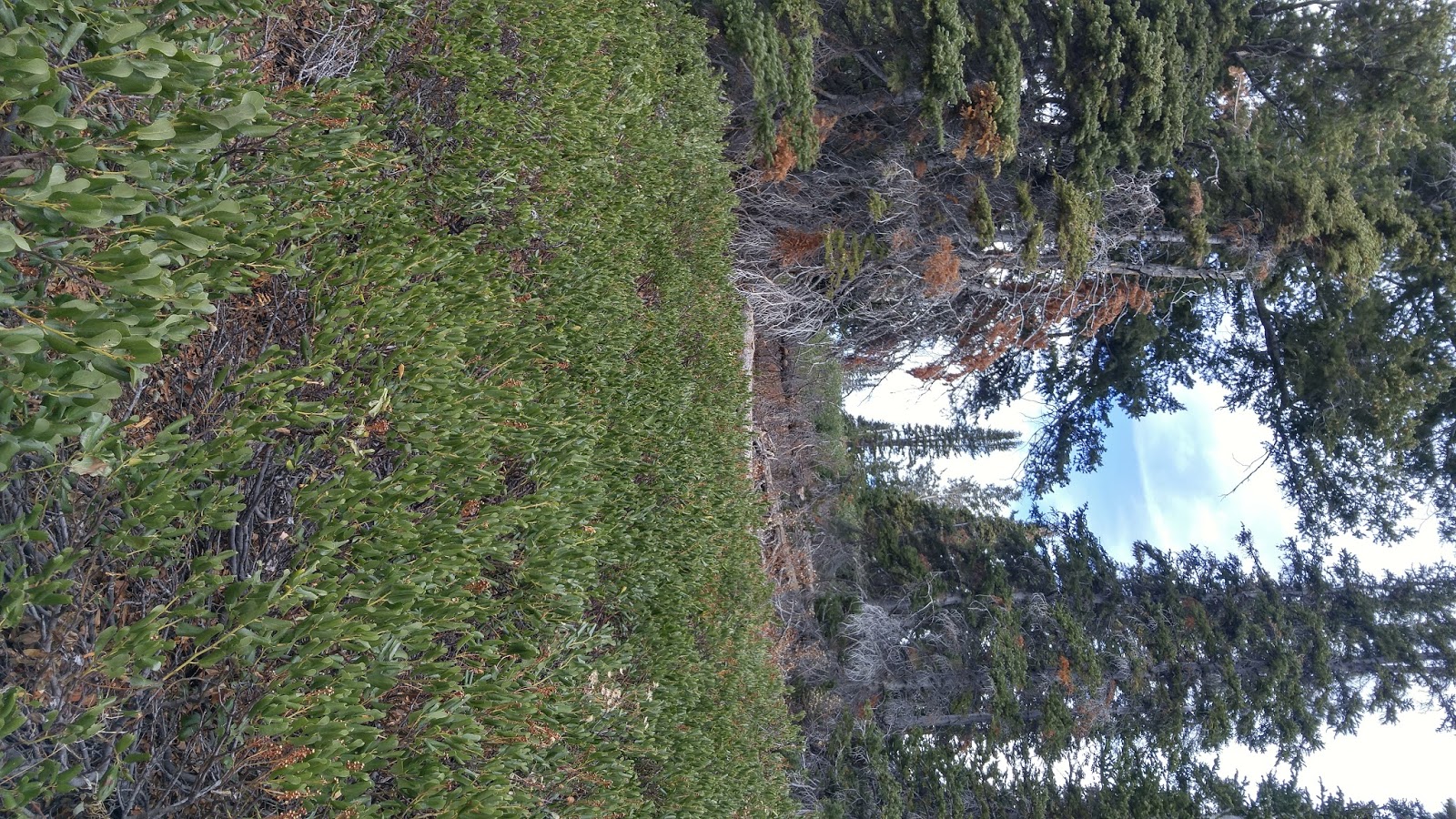
Here are a couple pics from the late elk hunt...


Back to the beginning of the season though…
My first hunt this year was the muzzleloader deer hunt with family and friends. It was the first time my 10 year old son tagged along. It was fun and challenging… challenging because I tried my best to hunt the way that I like to but still be realistic with a youngster’s ability (both physical and mental). In the end, it was a great hunt. I ended up tagging out on a young buck and we have since enjoyed some hickory smoked venison snack sticks and some steaks.


Next up was the doe/fawn pronghorn hunt up in Wyoming. This was really fun, and made me wish that a guy was able to get more than two tags. I was left with the feeling for several days that the hunt was too fast and too fun to be over… but with both tags filled it was. Four of my sons, aged 3 to 10 at the time, came with me and we had fun chasing goats through the sage and cactus.
Adding these two experiences to the previous experiences my 10 year old has had, he is anxious to get started himself. He is hoping to be taking the Utah Hunter’s Education course this winter and we will be looking into some mentored whitetail deer tags up in Idaho for the fall of 2018 where he will be able to carry the rifle himself.
My last hunt of 2017 was the aforementioned muzzleloader any bull elk hunt…
Over the course of the past several years I had been quite successful at patterning the elk in the area that I hunt. It was never difficult to find elk… never. Because of this I took a lackadaisical approach to scouting this summer and didn’t worry about setting up any trail cameras or make any special trips up to glass. I figured the elk would just be where they had been the last several years.
On the muzzleloader deer hunt I crossed paths with more than a couple guys that mentioned to me that the elk had moved out for some reason and just hadn’t been in the area at all throughout the summer. Over three days deer hunting in areas where bugling bulls and cows were often easy to come by, I confirmed what they were telling me. I didn’t see a single elk, and only heard one faint bugle.
This year I was also going to be hunting with a new hunting partner, a neighbor who was pretty green when it comes to big game hunting. So I felt is measure of responsibility to show him a good time… not to mention I had talked up the area pretty good and after telling him we should have no problem finding elk (I always made it clear that finding and killing were very different… it would still be difficult to kill an elk) I was getting worried that I would be eating some crow.
The four and half weeks between the deer and elk hunts were filled with worry for me. In that time the rifle elk occurred and several other hunters shared reports of no elk. I was really banking on lots of pressure moving elk around and the elk ending up where they have been over the past several years even though they hadn’t been there all summer.
On opening morning of the hunt we set up to glass and within the first 30 minutes we spotted a lone elk and watched it settle into a day bed. We tried to make a play on it but it vacated the area before we could get in range. That would be the only time we would see an elk over the next three days. We hiked into old areas that previously held elk, new areas that I thought might hold elk now if they were pressured out of those old areas… and saw & heard nothing. We tried glassing far off areas but found our optics lacking. We also had some weather roll in later in the hunt and found that some of our gear was also lacking.
When it was all said and done my friend left frustrated and humbled… I left angry and humiliated. It has been several years since I felt like this after a hunt concluded (my grandfather’s 2014 Manti elk hunt still ranks as the most frustrating experience I have ever had while hunting). I have a glimmer of hope though because my resolve to not let that happen again has driven me to success in the years following… I hope I haven’t lost that resolve! There will definitely be some changes made this next summer, I have to relearn where these elk went. I have some gear that needs upgrading… spotting scope and even more importantly cold weather/wind/rain gear.
In the end though it was fun to get to know a new hunting partner, and even though he was frustrated when we spoke a couple days later he told me that was the first time he’d seen an elk while elk hunting and he can’t wait for next year. That was a relief, I was afraid that the experience may have soured him.
In spite of the ups and downs 2017 was a great year and I look forward to the adventures of 2018.
Here are a couple pics from the late elk hunt...


Subscribe to:
Posts (Atom)
Popular Posts
-
 Subscribe to the Utah Big Game Odds blog, enter your email address: Delivered by FeedBurner Here's a project that I have been wantin...
 -
 A couple years ago a friend and I decided to buy a couple budget rifles. My intent was to have a short action rifle that would be suitable ...
 -
 I've had this recipe for a couple years and it is a good one for big game like deer, elk, bear, etc. It's also a convenient crock po...
 -
.jpg) My two oldest kids drew cow elk tags this year on Deseret Land & Livestock. It’s not uncommon to see online forum posts asking for inf...
My two oldest kids drew cow elk tags this year on Deseret Land & Livestock. It’s not uncommon to see online forum posts asking for inf... -
 The last piece of processing that I do every year is making snack sticks and summer sausage. I’ll combine these because both are stuffed in...