May 10, 2016

Tips for Success Series: "Pick a Spot & Stick With It!"

I’ve wanted to write up a series of brief articles to post here based upon the things that I have learned over the last several years that have dramatically impacted the success that I have experienced on my hunts. Here is the first of such articles.
The absolute best advice that I could give to any individual who is just starting to get into hunting is: Pick a spot and stick with it.
If you were to simply go to the Utah DWR website or go to the DWR store and look at maps of the hunt units here in Utah (or really anywhere in the western US) you’ll notice one thing… they are all huge. All of the individual units contain more acreage than what one hunter can cover in one season, heck multiple seasons. So the challenge faced by every hunter out there is to identify which of these hunt units we will spend our time and energy actually hunting and where we really hope to find the animals we are looking for. This is an overwhelming task, especially for those with zero experience or knowledge of a specific area.
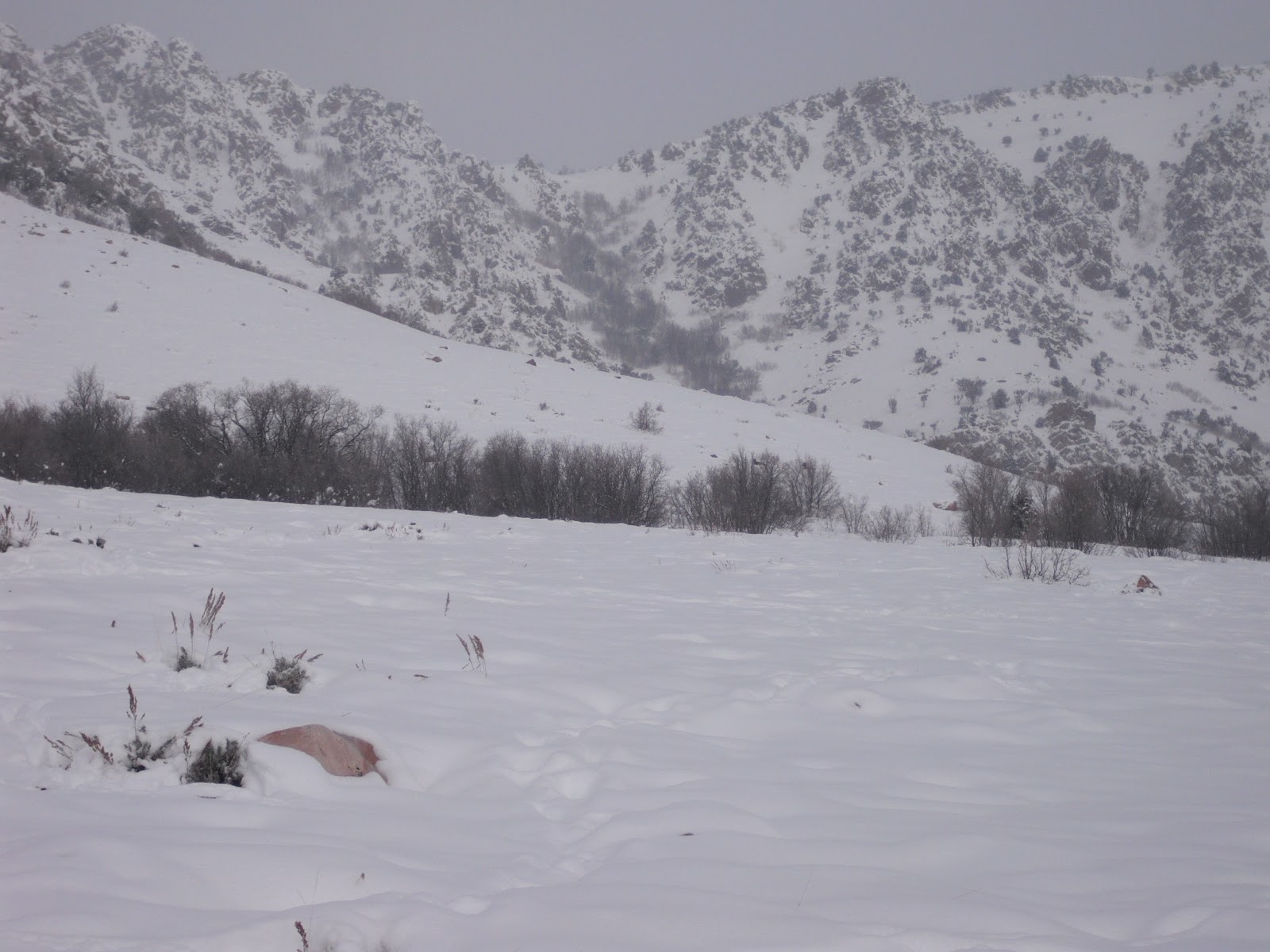
Our camp on my grandpa's Central Mountain, Manti
 elk hunt with the mountain we hunted in the background.
I experienced this recently when my grandfather drew a Central Mountains, Manti limited entry rifle elk tag. It was a brand new hunting unit to me, I had never once stepped foot on the Manti chasing any kind of big game animal. We were starting the research process on this unit from scratch. I was designated as researcher for the pre-hunt scouting so I went through a couple different steps to “pick a spot.” I immediately turned to the internet for any information regarding different locations within the unit. With a list of locations (mostly vague generalized area names) I turned to Google Earth and began looking for areas that would appear to fit my grandpa’s hunting style. From that time on Google Earth I was able to refine those generalized locations to specific locations that looked promising to me. With those locations in mind I took a drive with my grandpa to those areas just to check them out and we made a preliminary decision where we would focus based on what looked best to us. As opening morning rolled around and the hunt progressed we rarely ventured far from that spot. We picked a spot and we stuck with it… for better or worse (2014 Rifle Elk).
Whether you are hunting general season deer, general season spike or any bull elk, or a limited entry hunt you inevitably have to make a choice of where to hunt. The permits issued will tell you which unit(s) within the state you can legally pursue game in, however within each unit are numerous possibilities. In many units there are areas with different types of terrain, different levels of access, and inevitably differing amounts of other hunters and the game you are after. This is where you need to make a decision… and once you make a decision stick with it. Admittedly, this advice applies best to general season hunts where you can make an initial decision then year after year as you hunt that same area you can build a knowledge base that will ultimately yield consistent success. Limited entry hunts are a little bit different because the hunt is usually a one-time deal or if you do return for a second hunt there it is often years later. I have heard of great success using this philosophy on limited entry hunts if a large hunting group decides that they will all apply for the same hunt individually year after year and as each member of the group draws their tag they build their knowledge of the unit and share the knowledge and experience within the group.
Let me illustrate the benefit of picking a spot and sticking with it through two personal experiences. First the positive… I have some family property and have hunted that area for deer for nearly 20 years now. In 2012 a couple friends and I decided to try hunting elk there for the first time. We had very little knowledge of the elk herd in the area, we really began the hunt not knowing if we would even see an elk. We considered the hunt an educational experience more than anything, we ended up seeing a handful of elk but were not able to create any real chances for filling our tags (2012 Muzzleloader Elk). The things that we learned on that first hunt influenced the scouting strategy that we put in place the following summer. Later that fall, with the knowledge gained from the previous hunt and a summer of scouting, we had a much clearer idea of where we thought the elk were going to be. Success came for me on the second evening when I was able to shoot my first bull elk, a spike. We saw even more elk during the 2013 hunt and learned even more (2013 Rifle Elk). In 2014, now with two hunts and two summers of focused scouting, we felt that we had a pretty good base of knowledge and were anticipating success. We found elk easily and regularly during that hunt, and on the second morning I again tasted success as I was able to shoot a nice little 5x5 bull (2014 Muzzleloader Elk). In 2015 we continued to build our knowledge and had an especially successful year shooting two cows, a nice buck deer, and narrowly missing our chance at a couple nice little 5x5 bulls (2015 Muzzleloader Elk).
General area where a couple nice bulls were missed
on the 2015 muzzleloader elk hunt.
Over the course of the last four years we have built a solid knowledge base on our little spot, and over the course of the four years we have been able to increase our chances of success each year.
Now, the negative… after the 2009 deer hunt we decided that we were not seeing the number of deer that we thought we should be seeing on our family property. So for 2010 we determined to hunt a different area of the state. None of us had hunted this new area in more than 25 years, so essentially we were going into this area as if it were brand new. We didn’t do any scouting and showed up for the hunt the Tuesday before the muzzleloader opener and thought we should be able to find deer pretty easily. Four very frustrating days later we drove home and promised ourselves that we would never again discount the value of the knowledge that we had of the family property that made it seem so easy to find deer and have success (2010 Muzzleloader Deer).
One of the nicer bucks that was taken by my brother
on one of his afternoon drives.
My brother is a “road hunter” extraordinaire (road hunters benefit from this philosophy as well) and along with my father and grandfather have developed a routine that they follow religiously throughout the day. Each morning they make the same turns, following the same route each morning. Shortly after lunch they made a short drive into one specific area. Then in the evening they follow a different route for the evening drive. I don’t hunt with them much because I prefer to spend more time hiking around… but honestly, those guys have it figured out! Over the span of the last three years they have killed five deer on their brief afternoon drive just driving to this one specific spot at 1:45 in the afternoon and each of those deer have all been killed in the same small clearing.
With this philosophy you should desire to become so familiar with an area that you know exactly where and when you should be seeing deer, elk, or moose (or whatever you are pursuing). You will become instantly aware if something is “off”… if another hunter, or perhaps another predator, has been through the area. You will also become instantly aware if everything is set up for you perfectly. In my opinion, this is when hunting gets exceptionally fun.
The north facing slope where I watched the herd of elk before
shooting a cow near the water hole that is out of the picture. 
Last fall, on the muzzleloader deer hunt a friend and I hiked into my now favorite spot and just like we had done the two previous years we planned to sit over a small water hole for the evening. The bowl was quiet as we worked through the aspens and before we even arrived at our predetermined spot we began to spot elk working across the north facing slope that we would be watching the rest of the evening. We quickly recognized that conditions were perfect, the elk and other animals had been unpressured, and there was no question that we would at least have one opportunity to fill the cow elk tags that we also had in our pockets. Four hours later, after watching a small elk herd for the entire afternoon, three cows made their way to the bottom of the hillside to the small pond. My friend and I had waited patiently a mere 60 yards from that small pond for this opportunity. We had sat over this same pond the previous year with the exact same result, except last year I decided to pass on a cow elk because a decent little buck was also spotted just up the hill. I have absolute confidence that I will be able to go to the same spot next year and with favorable conditions be able to fill my cow elk tag.
The most difficult part of picking a spot and sticking with it is just that… picking the area or spot! My only advice is to find something that looks good to you. If it looks good to you then you will be more inclined to put in a little more effort to try and figure it out. Do some research, spend some time on Google Earth looking at satellite imagery, if possible go have a look at it yourself on a scouting trip, or if you can’t scout spend some quality time there during the hunt checking it out. Google Earth is a phenomenal tool… there have been many new spots within my area that I have explored thoroughly on Google Earth then later was able to go and see firsthand and it felt like I had been there before.
The second most difficult part of picking a spot and sticking with it is to know how long to stick with it especially if the area isn’t producing like you want it to. This is a tough call to make. Giving up on a spot you thought looked good is like admitting defeat and nobody likes that. None of us want to invest any amount of time in an area only to find that the animals just aren’t there and be left with the feeling that all the time was wasted. On the flip side, nobody wants to give up on a potentially great spot too soon. I suffer from this… not wanting to give up too soon, especially with some of the spots that showed real promise but have never really developed into anything tangible.
Inevitably as you develop a knowledge base of an area you will learn not only the areas that are productive but also the areas that don’t warrant your future time. I have one spot that I hunted three years in a row for deer beginning back in 2011… it was a very good area and I had the opportunity to shoot a very nice 4x4 mule deer buck there in 2012. However, since 2013 I have not been back. I haven’t abandoned it because it is a poor area, but I have spent my time in other areas of the property. I know that area is still productive and I have it on a list of places to check out but it is now a little further down my list than it was three years ago. Then I have another place that I set a couple of trail cameras for two summers in 2010 and 2011, and over the course of two summers I got mostly pictures of small bucks and moose. Nothing that I saw really interested me in that spot so after two summers I abandoned it entirely. On a whim this last summer (2015) I put a couple trail cameras there again and saw a number of nice bucks and lots of elk… don’t forget that over the course of several years things can change! As you develop your knowledge base of an area and some spots fall off your radar don’t neglect them entirely, be sure to circle back every several years because these animals move around.
One of my "go to places" that I no longer go to regularly.
The hardest part is making the call to move on from those really good spots to learn better spots. All of the spots that I have high on my list today and hunt every year were not on my list three years ago, and many of those places that were my “go to” places several years ago now hardly get a second glance as they are well down the list of options. I don’t think this is a bad thing, it’s a consequence of learning more and more about the area that I hunt and really dialing in on just a couple specific spots that are exceptionally productive for me during the hunting seasons.
The key to this philosophy is that it takes a little bit of time to learn the potential of any spot that you pick to hunt. You may not have success (in the terms of a filled tag) immediately when you go into a new area but it is my opinion that if you give yourself some time to learn it then success will come and eventually be had on a regular and consistent basis.
Jan 27, 2016

My 2016 Utah Application Guide for LE Species

On the eve of the opening of the bucks, bulls, and once-in-a-lifetime application period I’d like to share some of my thoughts concerning this application cycle. There have been a number of changes made over the winter that will have a potentially dramatic trickledown effect on a number of the hunts that need to be considered by many applicants. Additionally, I’d like to provide a guide for applicants looking to gain a better understanding of what to expect from this year’s application cycle.
Let’s start with the changes… there are a handful. Some will have a much greater impact than others for sure. If you open up the 2016 Big Game Application Booklet you’ll notice on the first couple pages that there is an extensive list of items listed under the “What’s New?” heading. I’ll not go into each of these items… only the ones that I think could have an immediate impact on the application trends that I have tracked since 2006.
Over the last few years there have been a number of additional hunt opportunities for limited entry deer. These opportunities are for muzzleloader hunters with dates that coincide with the general muzzleloader elk hunts. I think this is a great opportunity to spread some point holders around, but ultimately I don’t think that it does much to affect the top point holders at all. Last year was the first year of this new hunt opportunity in a select handful of units so I don’t have any data currently to make any speculation on trends. Suffice it to say, in my opinion, if the DWR really wants to make this a viable option and really potentially affect those top point holders… they need to extend the hunt so that it corresponds more with the mule deer rut. As it currently stands the hunt is in the pre-rut with this year’s dates being the latest they could be (you’ll hear a lot about this year’s hunt dates as we work through the breakdown of the different species) but it still seems to end a bit early to really get much into the rut. If the DWR were to move this only slightly, pushing it back by a week or two, I think you would really see some significant interest from guys/gals that have higher numbers of bonus points.
There will be a few new hunts on limited entry elk units this fall that will share the same hunt dates as the general rifle spike hunts. These hunts will be available on the following units: Box Elder, Grouse Creek; Paunsaugunt; Plateau, Fishlake/Thousand Lakes; West Desert, Deep Creek. There was considerable talk in the Wildlife Board Meeting when this was approved to include the Central Mountains, Manti and possibly even Wasatch Mountains units in this program but it was determined to pilot the program this year in these four units to determine its viability. Although this new hunt provides what I would consider a unique opportunity to bring back a large “family camp” with a limited entry tag holder hunting with family members who are also hunting spikes, I don’t see this hunt really affecting the top pointholders in the application and dramatically affecting the drawing odds for the more popular early rifle hunts on those units. I would anticipate the biggest draw for these hunts probably coming from the late rifle hunts with the archery, early rifle, and muzzleloader draws largely remaining unchanged.
A couple of hunts will be discontinued this year. The two that could pose the most impactful are the closure of the Beaver nanny mountain goat hunt and the closure youth late any bull hunt. Those applicants hoping to shorten their wait for a once-in-a-lifetime (OIAL) mountain goat tag by applying for the nanny tag will now only have one option, Ogden. This could have some pretty serious impact on the drawing odds for the Ogden nanny hunt. For the youth late any bull tag, it’s just unfortunate to see an opportunity for young hunters go by the wayside. But I understand that much of the area that this hunt was held in was private property, and there is still the early youth any bull which is still a unique OIAL experience for young hunters.
And finally, the regulation limiting muzzleloader hunters to a fixed power, non-magnifying aiming system has been lifted. Hunters are now free to use the scope of their choice on their muzzleloader regardless of magnification. I don’t see this change affecting the limited entry (LE) deer and pronghorn draws too much. The deer application trends show that archery, rifle, and muzzleloader bonus points pools are so close together that there would really be no incentive to switch from rifle to muzzleloader. The elk drawing on the other hand is where this change could absolutely be a game changer. As it currently stands it takes an average of four fewer bonus points to draw a LE muzzleloader elk tag compared to the same LE early rifle tag, and with the LE elk dates still providing hunters the chance to chase rut crazed bulls, this could be a huge incentive to make that switch. Additionally, electronic rangefinding devices attached to bows are also now legal. I don’t see this affecting any of the other (rifle, muzzleloader) draws and causing a real deviation from the trends for the archery applicant pool, though.
Some interesting changes to be certain and I will be interested to see how these changes affect this year’s application pool and compare them to the historical trends.
For those of you looking for any little tidbit of information, or possibly tips, to increase your chances at drawing a tag this year… let’s take a species by species look at this and break it down. I will not discuss the CWMU units at this time.
LE DEER
I don’t see anything that would lead me to believe that the trends will change for this year. This is how many bonus points I think it will take to draw each deer tag:
RESIDENTNON-RESIDENT
Unit Archery Any Weapon Muzzleloader Multi-Season Archery Any Weapon Muzzleloader Multi-Season
Antelope Island NA
Henry Mountains 17.4 19.3 19.0 20.0 NA 21.6 NA
Paunsaugunt 12.7 14.8 12.8 16.0 20.1 20.1 18.2
Book Cliffs 8.7 9.6 11.0 12.9 12.8 NA
Book Cliffs, North 10.7 13.9
Book Cliffs, South 10.7 15.0
Fillmore, Oak Creek 6.8 14.6 11.7 NA NA 21.6 NA
La Sal, Dolores Triangle 8.6 13.3 13.7 NA
San Juan, Elk Ridge 14.1 13.3 13.9 13.0 NA 18.5 NA
South Slope, Diamond Mountain 10.0 11.7 10.1 12.0 9.4 13.6 12.8
West Desert, Vernon 7.5 12.8 10.1 13.0 8.5 12.8 11.2 NA
North Slope, Summit 0 0 NA
Cache, Crawford Mountain 12.7 14.9
Chalk Creek/East Canyon/Morgan-South Rich 9.0 NA
Kamas 6.0 NA
Nine Mile 6.0 NA
Pine Valley 11.0 NA
Southwest Desert 14.0 NA
Zion 9.0 NA

“NA” means that there has historically only been one tag offered so the tag is issued through a lottery style drawing. “Blank” means that there have historically not been tags offered for this unit.
I expect a little bit of fluctuation with the muzzleloader only units (Chalk Creek, Kamas, Nine Mile, Pine Valley, Southwest Desert, and Zion) simply because I only have one year of data to reference. I also expect some fluctuation with the Multi-Season hunts as well since last year (2015) was the first time these hunts were offered. In the coming years I expect the trends to become more clear for these hunts as more data points are obtained.
LE ELK
The permission now of magnifying scopes on muzzleloaders I think will have the greatest impact with the LE elk drawing. I can only speculate, but I would anticipate an increase in applicants for the muzzleloader tags. One thing that may even out the applicants somewhat are the season dates… these season dates are the latest dates that are possible under Utah’s hunt date system. This year I would expect to see a spike in archery applications as this year the archery dates are the “best” they could be for hunting during the first part of the rut. Applicants for the early rifle tag should remain relatively constant… not much changes with these rifle hunts because of their popularity. The muzzleloader hunts may see a slight drop off because of how late the season starts (September 28 compared to last year’s opening date of September 23), however this potential slight drop off could be completely wiped out by the magnifying scope change! The late rifle hunt is where I think most guys/gals will jump from to potentially hunt the new October hunts during the general spike hunts. This is how many points I think it will take to draw each elk tag:
RESIDENTNON-RESIDENT
Unit Archery Early Any Weapon Late Any Weapon Muzzle loader Multi-Season Archery Early Any Weapon Late Any Weapon Muzzle loader Multi-Season
Beaver, East 11.8 20..3 15.0 18.1 NA NA NA NA NA
Book Cliffs, Bitter Creek South 5.9 17.7 10.3 13.2 19.1 13.7 18.2 14.3 15.7
Book Cliffs, Little Creek Roadless 6.3 17.3 13.5 NA NA 20.0 NA NA
Box Elder, Grouse Creek 14.5 8.7 NA
Box Elder, Pilot Mountain 18.4
Cache, Meadowville 0.7 4.3 2.1 0.7 23.0 NA 10.3 3.0 NA
Cache, North 0.4 8.7 6.5 4.0 NA NA 10.2 NA NA
Cache, South 3.6 13.5 9.7 9.4 17.6 6.3 13.5 9.0 12.5
Central Mountains, Manti 4.5 14.5 8.8 10.7 18.7 10.7 15.0 11.1 13.6 NA
Central Mountains, Nebo 3.2 12.1 11.3 5.2 16.1 9.3 NA NA NA
Fillmore, Pahvant 13.3 21.8 15.8 18.3 22.5 NA NA 13.2 20.0
La Sal, Dolores Triangle 15.1
La Sal, La Sal Mountains 3.5 13.4 7.2 9.2 18.0 12.9 16.9 13.2 18.0
Monroe 13.6 20.9 17.1 18.1 NA NA NA NA
Mt. Dutton 3.6 14.9 12.1 11.7 19.3 14.4 17.5 15.1 13.0
Nine Mile, Anthro 2.8 14.7 11..5 12.1 NA NA NA
North Slope, Three Corners 6.5 15.1 6.5 NA NA 14.8 NA
Oquirrh-Stansbury 4.1 13.4 10.3 9.4 NA NA NA NA NA
Panguitch Lake 6.7 16.1 11.4 12.2 20.4 12.4 20.2 13.3 NA
Paunsaugunt 2.3 10.9 7.0 4.5 13.1 8.8 14.4 11.0 NA
Plateau, Boulder/Kaiparowitz 11.6 18.3 14.0 16.5 21.9 16.0 19.8 17.8 NA
Plateau, Fishlake/Thousand Lake 3.7 13.4 10.4 9.1 17.3 10.2 16.6 13.7 13.8 NA
San Juan 16.3 21.6 15.0 19.9 22.6 NA 22.4 NA NA
South Slope, Diamond Mountain 4.5 11.5 11.2 8.0 NA NA 15.1 NA NA
Southwest Desert 7.7 18.9 12.1 14.4 20.2 13.5 20.2 16.6 17.9
Wasatch Mountains 4.3 14.4 11.7 8.4 18.9 8.6 13.8 11.3 11.2 15.2
West Desert, Deep Creek 2.5 13.4 10.7 8.7 NA NA NA NA NA

Again, “NA” means that there has historically only been one tag offered so the tag is issued through a lottery style drawing and “blank” means that there have historically not been tags offered for this unit.
I do expect to see some change to the trend in the muzzleloader applications this year, but the extent of the change is unknown. This will be the most interesting thing to see when the results for this application cycle are released.
LE PRONGHORN
Much like with the LE deer drawing, I don’t see anything that would lead me to believe there will be any changes in the trends that I have observed. This is how many points I anticipate it will take to draw a pronghorn tag:
RESIDENTNON-RESIDENT
Unit Archery Any Weapon Muzzleloader Archery Any Weapon Muzzleloader
Beaver 2.0 4.7 NA
Book Cliffs, Bitter Creek 2.6 7.1 NA
Book Cliffs, South (Cisco) 2.6 5.1 NA 10.8
Box Elder, Pilot Mountain NA 8.3 NA
Box Elder, Promontory 0.3 3.9 NA
Box Elder, Puddle Valley 6.8 6.8 NA
Box Elder, Snowville 2.0 5.9 NA
Cache/Morgan – South Rich/Ogden 0.8 5.6 3.0 7.0 5.3 6.0
Fillmore, Black Rock Desert 4.9 6.3 NA
Kaiparowitz NA
La Sal, Potash/South Cisco NA
La Sal, South Cisco 4.7 8.1
Mt Dutton/Paunsaugunt
Mt. Dutton/Paunsaugunt, John’s Valley 3.2 NA
Nine Mile, Anthro 2.7 5.7 7.9
Nine Mile, Range Creek 8.6 NA
North Slope, Summit 8.0
North Slope, West Daggett – Three Corners 3.6 6.1 NA 6.8
Panguitch Lake 5.8 NA
Pine Valley 3.1 5.0 NA 6.6
Plateau 1.1 4.2 0.9 2.7 6.0 7.7
San Juan, Hatch Point 7.8
San Rafael, Desert 9.3 NA
San Rafael, North 4.2 9.3 NA 16.8
South Slope, Bonanza-Diamond Mountain 4.0 8.6 6.1
South Slope, Vernal 3.0 6.8 NA
Southwest Desert 2.4 5.1 1.0 6.9 10.9 9.0
West Desert, Riverbed 6.8 11.6 NA NA
West Desert, Rush Valley 5.9 10.6 NA
West Desert, Snake Valley 4.6 10.1 13.5

The muzzleloader pronghorn hunt has only been around for a couple years and it looks to me like it still hasn’t quite caught on yet. That makes the muzzleloader options great “easy” draws if a guy/gal would be interested in chasing pronghorn with a muzzleloader… and with the scope magnification restrictions now lifted I’m hopeful that these hunts become more popular and the DWR opens muzzleloader seasons in other units.
Check out the species specific analysis pages for more information on the LE deer, elk, and pronghorn draws. Also check out those same pages for more information on OIAL species.

Jan 3, 2016

2015 Antlerless Elk... "Our" Elk

Over the last several weeks I have been waging one of those internal struggles that would impact how I go about my business hunting and fishing going forward. I had been putting off taking my kids because of how young they are and because my hunting and fishing style is, for lack of better words, just a lot of work. I guess you could say that one of my New Year's “resolutions” was/is to include my children in some of theses activities.
I had a cow elk tag that ran through the end of the year for 2015 and had been unable to make much time to try and fill this tag, so a couple friends and I decided to take the last two days of the year off and dedicate that time to chasing some cow elk. The night before (so the 29th) as the kids were getting ready to go to bed I asked my wife if I should take my oldest son with me. As soon as my wife said that would be fine, I got nervous... the forecast was for exceptionally cold temperatures and I began to get uneasy that I would be able to keep him warm enough to be able to out there for very long. When I asked him if he wanted to go he just lit up and I told him to gather his snow gear as if we were going snowmobiling.
The next morning (the 30th) I poked my head into Logan's bedroom at 5am to wake him up and he popped up out of bed. We got dressed in the kitchen where I had laid out his clothes and made sure that he matched how I dressed layer for layer. We jumped in the car and headed for the canyon. As we pulled into the parking area of the WMA there was a large herd of elk just off the side of the road. These elk were safely within the fences of private property. As we entered parking lot to the WMA we found a dozen or more trucks already there with small orange dots peppering the hillside and canyon in front of us. I'm conditioned to hunt private property where pressure is light, and in many instances my hunting party may be the only one on the mountain for days, so this was going to be very different for me... let the rodeo begin.
We chatted briefly with a gentleman that was waiting in his truck for a friend. He was extremely anxious because his friend has access to the private area adjacent to the WMA where the large roadside elk herd was located. I asked if there was any way for others to gain access or permission from the landowner but was told that only 4 individuals were granted access to the ranchers property. After hearing that I immediately considered the possibility that this rancher who is not allowing hunters to push elk off his property would soon be crying for assistance from the DWR to pay for damage to his property and feed by these elk... a frustrating train of thought. The roadside herd of elk began working it's way out of the bottoms into a large bowl that is also part of the ranchers property.
He began to use some colorful language in front of my 8 year old son, so I ended the conversation and began hiking. We worked our way up the bottom of the canyon for about a mile. We spotted a good number of deer but no elk. We had heard a handful of shots early while talking to the gentleman in the parking area, but we were not seeing much in terms of elk.
We picked out a small knoll that we figured would give us a good vantage point and made our way to the top. At the top we spotted two cow elk bedded in in a open area about a mile away.


As we looked over these two cows, we also spotted two orange dots between us and the elk. We thought for sure they had seen the elk and were working their way over to them. As we watched these two hunters for several minutes it became apparent that they could not and had not seen the elk. A plan was hatched for a couple of us to skirt below the two hunters who had hunkered down under a couple pines and close the distance on the two bedded cows. I asked Logan if he wanted to come with me or if he wanted to stay on the knoll with a couple of the other guys. He was coming with me, so off we went blazing our own trail through thick brush and thigh deep snow... waist deep for him. He was with me stride for stride and we covered ground faster than I had thought we would. Doug had reached the landmark before I did and had a couple minutes to get settled into position and keep and eye on the elk.

Logan decided to stay by the tree while Doug and I moved 30 or 40 yards to get a clearer shot.
My elk was to be the one on the left, so with a clear shot on the bedded cow I took aim and fired. The bedded cow stood, so a second shot was taken. At the second shot she lurched and took off on a mad dash down into some of the thickest and nastiest stuff I have ever seen. We found the blood trail and we followed it for a short time until we found her laying down in an even thicker thicket. We negotiated thick brush, steep slopes, and waist and thigh deep snow... and the whole time Logan was right there pointing out drops of blood that had frozen on twigs and branches. A final shot was administered to ensure the chase ended there shortly after noon. My goodness, she went through some of the most awful brush that I have ever seen and had there not been a blanket of white snow on the ground making a blood trail clear I would guarantee that we would have probably never found her.

Doug took a couple pictures with Logan and I. I've taken some amazing pictures hunting and fishing over the years... but these are my favorites.

Logan is a very methodical and observant little guy and had a litany of questions as I began to skin and quarter the cow (which we actually determined to be a female calf, her ivories had just barely erupted). He watched as I began to peel the hide back to reveal the muscle and observed that muscles continued to twitch and everything appeared to be “wrapped in plastic already.” He made sure that I took all of the meat that he could see. I skinned and quartered solo since Doug had left Logan and I once we had found this elk to go and track the other one. I wanted no part of coming back into that area for a second trip so I loaded up my pack with all the meat it would hold, then made up a second sack that I would carry in my arms. We would go about 50 yards and I'd need a rest. Bless his heart, Logan was right there in my footsteps.
It was about a half mile to where we would meet up with the guys that we had left (they had worked their way one knoll closer to where the elk had been), and when we finally reached them I was absolutely gassed, and Logan was talking a blue streak. His energy and excitement really kept me going. Josh offered to take the bag that I was carrying in my arms, which really helped. We were able to get back to the main trail which really helped, because plowing through deep powder with an extra 70ish pounds on your back is pretty rough. We made it back to the parking area and loaded the meat in the cooler at about 4pm.
The heater in the car was turned on and layer after layer of clothes were shed, toes and fingers were warmed up, and picture texts were sent to mom and just about every family member I had a phone number for showing our trophy saying we would be home soon.
My Fitbit read 8.25 miles, more than half of that was plowing through fresh powder... and throughout the day I did not hear one word of complaint from Logan. I am not only prouder than heck of him but I'm truly impressed with him... he's one tough little dude.
With the meat home I took the next couple days to butcher everything and get it into our freezer. I laid out the steaks and roasts. My other boys ran over to the table and screamed “STEAK!!!” much like a Civil War General would have yelled “CHARGE!!!” to his troops. I got my wife's attention with the 17 pounds of ground that I later laid out on the table. For many years now I have put meat in the freezer and it's always been “dad's elk” or “dad's deer”... this one is different, it's “our elk” and I hope that he takes as much satisfaction and pride in putting it on the table as I do.

Nov 4, 2015

Sometimes things just work out...

While Doug and I hunted side by side for much of Thursday and Friday, on Wednesday we went our separate ways for much of the day and this is his tale of his Wednesday afternoon (in his own words and used with his permission)...

The morning of the opener of Utah's general season muzzleloader elk hunt came along a lot faster that I would have ever imagined. I found myself glassing for elk like I had imagined all summer long. My heart skipped a beat when I finally spotted tan dots in the distance moving into a stand of oak. My binos dropped to my chest and I grabbed the spotting scope and tripod and lined them up as if I was going to take a shot. At over a 1000 yards I could tell the that the bull that I was looking at was a 6pt on at least his right side. From that point on I had enough adrenalin to last me into the end of the day. We decided that since in years past we could just aimlessly wander the hillsides and come across elk there was nothing to lose going in after those elk so immediately we packed up of the heavy gear and left it in the car as we started hour trek towards the elk. Just before dropping down where we would lose sight of where they were we noticed another herd just below a saddle headed in the direction we wanted.

As we arrived at where the elk were we discovered that they were no where to be found. So I radioed Jared and he informed me that they had moved to the pines above my current location. It was then that I realized that I had a vacant rangefinder pouch on my belt. I am famous for losing rangefinders and apparently my trademark move manifested itself again. I did a brief retrace of my steps and never located it and finally decided to pursue the elk in the pines. As I approached the pines I discovered 3 hunters at the top of the hill and I can only assume that at least one of them was hard of hearing because they were all talking in a manner that would enable me to hear their conversation from hundreds of yards away. I figured that any elk in the area would move on since their voices echoed throughout the canyon.

The next hill over is beyond what I would consider to be reasonable hiking distance from our vehicle but I decided to go ahead and check it anyways. As I reached the summit I picked out a tan dot leaned up against a triangle shaped rock several ridges over. Unsure if it was an elk I decided to check it out anyways. Sure enough as I hiked and hiked and hiked the dot stood up to graze and to adjust to get comfortable. From 1000's of yards I could tell that it was a cow elk but I had high hopes that perhaps a bull was in the vicinity. The location was miles and miles from where I had originally started out and there were several 1000ft of elevation that I would have to go up and down in order to get to the elk, but I figured an elk is an elk. The triangle shaped rock was a perfect landmark and I just wanted to kill an elk.

So I dropped down 1000ft in elevation only to climb 549ft to be able to get a better look at the cow. Once I reached the summit I discovered that several moose were going to be obstacles that I was going to have to work around to get to the elk undetected. 2 bull moose and a cow and a calf were going to have to keep mum as I snuck past them in order to line up a shot on a non existent bull bedded with the cows. I figured worse case scenario I get a little bit of practice at stalking elk and best case scenario there is a bull bedded down with the cows. So I had nothing to lose and stalked past the first 2 bulls. I could watch the tips of their palms as I snuck past them and they never even stood up. Next the cow and the calf decided to stand up and they head up the hill and vacated the area. I was able to keep tabs on the cow the entire hike and she finally had me pinned once I got within 200 yards of her. She stood up and I expected her to vacate the area and I got ready for a shot in case a bull followed her. As she got antsy I noticed other elk in the stand of trees magically appear and stand up from her proximity. Soon they started to file out 2 cows and a calf exited the bedding area and one calf remained.

I once heard on a forum that a calf elk weighs about as much as a big buck deer and I figured I could handle packing out a calf and I happened to have a cow elk tag on me so I lined up a shot and got on the ground and rested my muzzleloader on my pack. Boom! Smoke and rotten eggs smell was all over the place. Then when the smoke cleared the calf was laying right where I had shot at her and her legs were kicking up in the air. I gave a high five to an imaginary friend knowing that he would not be helping me with the pack out. I began to hike towards my elk and suddenly it got its hind feet up. It made an attempt to bleat but blood clogged its throat and it spit out blood. It was doing a rear wheel drive plow and moving along. I could hear all kinds of commotion in the direction it was headed and I knew it would not be getting far. I waited for about 30 minutes because surely I had a dead elk on my hands.

After an eternity of cleaning my gun and loading a round I headed up and found sure signs of a lung hit and foliage smeared with blood. Just as I was approaching where I expected her to be I noticed 2 camouflage hunters on a dead run. As soon as I raised my binoculars onto them I gazed over at their quarry. Sure enough I spotted the calf bedded down with grass matted down on a circle around her. Just as I focused on her I watched her hind quarter raise and she rolled over and a nano-second later I heard a boom! She was kicking in the air unable to get up this time. From my optics I watched an adult approach the elk and slit its throat. I was headed down to make sense of what had just happened when I could see camera flashes on the hillside. I raised my binos to see a kid holding up the head of the calf. It was getting late and I still had miles and miles to hike before reaching civilization so I decided to let the young hunter and mentor enjoy their moment.

The next day we observed the same hunters with some pack horses and the calf wrapped up in florescent orange. I couldn't help but feel better about not having to have to pack that calf out of there. My cow tag is a late season tag that will be starting at a later date for the same area so I would have another opportunity to fill it.

Sometimes things just work out.

Nov 2, 2015

That One Good Chance...

In an effort to not tempt fate, or anger the gods, or invoke bad juju… each year when the hunts begin I enter the field with the hope of getting just one good opportunity to fill my tag and put some antlers on the wall and meat in the freezer. I trust that when that one good chance does happen that I am up to the task. This year’s muzzleloader elk hunt was all about that one good chance…

Darren, Doug, and I piled all our gear and food into my Chevy Equinox and made the relatively short drive up the canyon to the cabin. Grandpa, having left earlier that morning would be waiting for us to arrive with the fire already roaring, the cabin toasty warm, and a pot of taco soup simmering on the stove. We unloaded our gear and settled in for the evening with the anticipation of opening morning growing. Jared would arrive early Wednesday morning, and my uncle would arrive Thursday morning due to some Church responsibilities.
Darren, Grandpa, and my uncle would primarily drive the roads hoping to find “a stupid one” which they could shoot. Doug, Jared, and I would take a very different approach. Opening morning found Doug, Jared, and I high atop the ridge glassing the big valley below and across from us. After several more minutes than we had originally hoped, as Doug hunched over the eyepiece of his spotting scope he muttered the words that would set the day into motion… “We got elk!”

Sure enough it was a decent sized herd working along an area we call The Short Ridges. A plan was devised and off we went splitting off to cover different routes in our pursuit of the herd. Shortly after that a second herd was spotted coming down a rocky chute from a saddle two ridges away. I dropped all the way down to the bottom of the big canyon then up the other side where I ultimately lost the two herds. I decided to take a stroll up the ridge to glass a familiar bowl with ponds where another friend and I had shot a cow elk during the muzzleloader deer hunt. I found a great rock to lean up against as I sat on the ground and glassed the hillside. I had a prime view of the area and there was a good deal of animal activity in the area… three bull moose sparring over a cow, two small buck deer grunting and chasing three does and a smaller buck around… but no elk.

I got comfortable sitting against that rock and just soaked in the late October scenery and the activity around me knowing that the herds could not have gone far and I had a pretty good idea where they were. Up the hill above me near the rim of the bowl I began to hear talking and I scanned the horizon to locate three guys above me in not-so-quiet conversation about their morning hunt. It was noon, and after several minutes of listening to their conversation I began to hear the unmistakable sound of elk vacating an area. It took me a second to get eyes on the herd because it sounded like they were stampeding from everywhere. Eventually a string of 17 elk made their way south of me back across the rocky chute below the saddle and out the area I was watching. The elk were actually right where I thought they would be. There were 10 cows and calves and seven bulls in the herd. One of the bulls was a good bull, considerably larger than the raghorn bulls in the group.

I decided to try and follow the herd and I made my way across the rocky chute and up to the saddle. At the top I peeked over and took a couple minutes to glass an area that we call “The Claw.” Even if I was able to spot something I’m not sure if I would have been too anxious to go any further after it because with every step my little silver car on the horizon two ridges to the north was getting further and further away and the afternoon getting later and later. I also peeked around the rocky saddle to the south and spotted a group of three hunters sitting on the ridge below me quite a ways. I decided that it’d be best to begin my trek back in the direction of the car figuring that it may take me all the remaining daylight hours to get back there. On the return hike I was able to spot and photograph one of the biggest bull moose I've seen in a while.

After finally reaching the car, I realized that I may have overextended myself on this opening day!
The forecast for Thursday was not great as a small storm system would work its way through the area. We again found ourselves high on the ridge in the morning glassing and spotted the herd from the previous day again working their way down the rocky chute below the saddle. The clouds began to roll in and visibility soon became somewhere between none and zero. We tried to wait it out as long as we could and spent a good chunk of time in the car just kind of existing together waiting for any little break in the clouds. We’d had enough of that and decided to head back to the cabin. The valley around the cabin was considerably clearer so we decided to hike up to a spot that my family calls “The Big Rock” which was a very popular place to go sit years ago during the rifle deer hunt… too popular in my uncle’s words. We spooked a couple of deer but that was about it and as the storm began to roll into this valley we decided to head back to the cabin and hunker down for the night & Jared decided to call it a trip and head for home.
Friday morning Doug and I followed the usual routine and arrived high on the ridge and began glassing. In the very early pre-dawn we spotted a new herd of elk directly across the canyon from us. There were 6 or 7 cows and calves and 4 bulls… one small bull and three 5x5s. We watched as the cows/calves made their way into some nearby pines and we assumed at that time they bedded down. The three 5x5 bulls continued to feed, moving at a very leisurely pace. We hatched a plan to shadow them from the ridge we were on and see if we could see where they would possibly bed down and hopefully it would be in a spot that would allow us to make a decent stalk.
The three bulls entered a small clump of pines and didn’t come out. We decided to give them a couple minutes and just make sure. One of the bulls emerged from the pines, circled them, then went right back in and did not come out. By this time we had dropped nearly halfway down from the ridge we were on & we knew that we had three elk in a clump of pines and it appeared like they were in a relatively vulnerable position. Our plan was to always keep those pines in sight and we would leap frog each other to various landmarks until we got all the way down to the bottom of the canyon and would have to lose sight of the clump of pines. Once at the bottom of the canyon, we made a straight line assault on the steep incline to a pine tree that we had selected as our preferred final destination.
As we skirted the pine and found a good spot to sit in full view of the pines, we spotted one of the three bulls bedded just behind a scrubby bush. He was bedded with the front shoulder and a small portion of his vitals exposed. We debated as to whether or not to try the shot, but I never could feel confident looking through the 1x scope the vertical crosshair covered up that entire opening. The range finder repeatedly told me the elk was 161 yards away. Doug and I sat in the wet leaves for several minutes with both of us stating our disbelief that our plan had actually worked and here we sat with what we really hoped would be that one opportunity… that one chance.
We sat for a couple minutes and discussed the shot that we were hoping would be presented and I clearly remember reminding each other to aim slightly lower than we would think due to the steep angle of the shot. At 161 yards, at that angle, the aim point should be right on the vital area with very little compensation for the distance. We were ready for anything to happen now, I was on the shooting sticks and it was a waiting game. Sooner than expected, the bedded bull that we could see came to alert and then stood. It was slow motion and chaos simultaneously! Everything that we had just discussed went completely out the window and the first bull stepped clear of the scrubby bush. I put my vertical crosshair right where the dark mane of the neck meets the light hair of the body and the horizontal crosshair at the top of the hump on the shoulder and fired. The other two bulls stepped out as well and Doug fired. The bulls then stampeded down the hillside towards the bottom of the canyon appearing no worse for wear. We sat in the wet leaves reliving the three seconds that it took for us to both shoot and the elk to be gone and as we recounted to each other our shots we both realized that in the heat of the moment “Bull Fever” won the day. Both of our shots wizzed just over the backs of different bulls! A good scouring of the area where the bulls were bedded then ran revealed that the elk had incurred no injury and were safe on this morning. I have relived that image through my scope a number of times now and think of the “what could have been” had I actually followed my own advice and aimed just as we had discussed!

We made it back to the car and a wave of unforecasted snow settled into the valley for the afternoon. Back at the cabin we again relived our exploits of the morning and prepared for Saturday morning which would be our last morning to hunt. Saturday morning we located the cows and calves that were with the bulls the previous day but they were methodically moving their way up the mountain putting distance between us and them at a steady pace. We closed the final chapter of this hunt by watching that string of elk zigzag through the pines two ridges to the west of us and up over the top dropping over into The Claw.

Popular Posts